
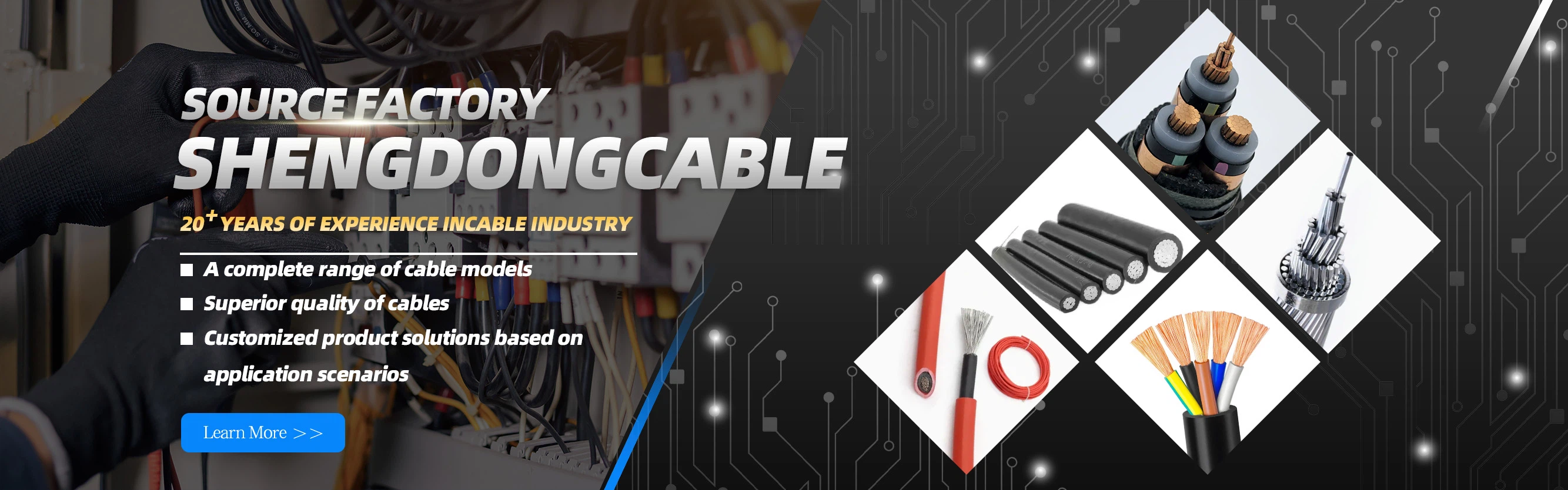
Your Professional Control Cable Supplier
Control cables are dedicated to transmitting low-voltage control signals and commands (rather than electricity), connecting instruments, relays, frequency converters, and other equipment in the control system to achieve automation functions such as equipment start stop, parameter adjustment, and status feedback.
application area
Industrial automation: signal transmission between PLC and sensors
Building control: fire alarm, air conditioning start stop, lighting control circuit.
Energy facilities: wind power pitch control, substation relay protection cabinet wiring.
Transportation system: subway signal control, high-speed rail traction command transmission.

-
![Computer Control Cable]() Computer Control CableComputer control cable is a type of cable specifically used for signal transmission and connection between computer systems, automation control systems, and detection instruments.view more
Computer Control CableComputer control cable is a type of cable specifically used for signal transmission and connection between computer systems, automation control systems, and detection instruments.view more -
![Copper Wire Shieldedsignal Control Cable]() Copper Wire Shieldedsignal Control CableCopper wire shielded signal control cable is a type of wire product specifically designed to resist electromagnetic interference (EMI) environments, commonly used in industrial control circuits and other applications that require stable...view more
Copper Wire Shieldedsignal Control CableCopper wire shielded signal control cable is a type of wire product specifically designed to resist electromagnetic interference (EMI) environments, commonly used in industrial control circuits and other applications that require stable...view more -
![FR PVC/S Cu Control Cable]() FR PVC/S Cu Control CableThe control cable KVVP is an industrial signal transmission cable that uses polyvinyl chloride (PVC) as insulation and sheath material, and achieves electromagnetic shielding function through copper wire braided mesh.view more
FR PVC/S Cu Control CableThe control cable KVVP is an industrial signal transmission cable that uses polyvinyl chloride (PVC) as insulation and sheath material, and achieves electromagnetic shielding function through copper wire braided mesh.view more -
![Flame Retardant Steel Tapearmored Control Cable]() Flame Retardant Steel Tapearmored Control CableFlame retardant steel tape armored control cable is a cable designed specifically for industrial environments, with excellent flame retardant performance and mechanical protection capabilitiesview more
Flame Retardant Steel Tapearmored Control CableFlame retardant steel tape armored control cable is a cable designed specifically for industrial environments, with excellent flame retardant performance and mechanical protection capabilitiesview more -
![FR PVC/PVC-S-F Cu Control Cable]() FR PVC/PVC-S-F Cu Control CableFlame retardant soft copper conductor PVC insulated PVC sheathed shielded control cable is a cable that uses copper core conductor, PVC insulation and sheath material, and has a braided shielding layer.view more
FR PVC/PVC-S-F Cu Control CableFlame retardant soft copper conductor PVC insulated PVC sheathed shielded control cable is a cable that uses copper core conductor, PVC insulation and sheath material, and has a braided shielding layer.view more -
![FR KVVRPT-F Cu Elevator Control Cable]() FR KVVRPT-F Cu Elevator Control CableSoft copper core PVC insulated PVC sheathed shielded control cable (such as KVVP cable) is an industrial signal transmission cable that uses PVC as the insulation and sheath material, and achieves electromagnetic shielding function...view more
FR KVVRPT-F Cu Elevator Control CableSoft copper core PVC insulated PVC sheathed shielded control cable (such as KVVP cable) is an industrial signal transmission cable that uses PVC as the insulation and sheath material, and achieves electromagnetic shielding function...view more


Why Choose Us
Guarantee Supply
We have a modern large-scale production base and sufficient production capacity, coupled with a scientific warehousing management system, which can efficiently respond to large-scale and multi specification order demands. Ensure that your engineering project progresses as planned without any worries.
Swift Delivery
Our global logistics network and efficient distribution system are the cornerstone of our commitment to fast delivery. Whether it's a regular order or an urgent need, we can do our best to deliver the high-quality cables you need to the designated location on time.
Complete Range of Cable Categories
Our product line covers a wide range, including power cables (high and low voltage), control cables, wiring, and special cables (such as flame-retardant and fire-resistant, mineral insulated, photovoltaic, wind power, marine, etc.), to meet your diverse and complex project needs and simplify your procurement process.
Ensure Product Quality
Adhere to the concept of "quality is life" and establish a comprehensive quality assurance system (such as ISO 9001). From material quality control at the source to factory inspection of finished products, layer by layer control is implemented to ensure that every roll of cable delivered has stable performance, safety and reliability, and can withstand the test of time and environment.

1. Low resistivity, high current carrying capacity, low voltage loss, and low energy consumption;
2. High strength, good ductility, low heating temperature, and can reach up to 20 ° C under allowable stress at room temperature;
3. Anti fatigue, not easily broken or bent;
4. Good stability, corrosion resistance, oxidation resistance, and easy construction.
5. Control cables have high electrical equipment performance and high penetration compressive strength.
6. Good chemical resistance. Low relative dielectric constant and low dielectric loss; It has temperature resistance and aging resistance, and the long-term allowable operating temperature is 70 ℃.
Specification
|
DJYPV |
Copper core polyethylene insulated polyvinyl chloride sheath. |
|
DJYP2V |
Double layer aluminum foil shielding structure. |
|
ZA-DJFV |
Flame retardant Class A fluoroplastic sheath type. |
|
JYP2V-2B |
Copper strip shielding type, suitable for different logarithmic and cross-sectional sizes, such as 0.5mm ², 0.75mm ², 1.0mm ², 1.5mm ², 2.5mm ². |
Types of Control Cables
Flexible Cables – Ideal for applications requiring frequent bending and movement.
Shielded Cables – Used for sensitive applications requiring protection against electromagnetic interference.
Heavy-duty Cables – Suitable for rugged industrial environments.
Instrumentation Wiring – Ensures accurate data transmission in automation and control systems.
Fire-resistant Cables – Enhance safety by preventing fire hazards in critical installations
High-performance Cables – Designed for specialized applications requiring superior durability and efficiency.
Data Transmission Cables – Used in communication and networking applications.
Key Components of a Control Cable
Multiple Conductors
Unlike power cords with a single hot and neutral pair, control cables contain multiple insulated wires, each transmitting a specific signal—like a synchronized digital orchestra.
Shielding Techniques
Control cables use shielding methods such as braided or foil wraps to protect delicate signals from electromagnetic interference and electrical noise.
Material Selection
While copper is the standard conductor material, some cables feature tinned copper for corrosion resistance or fiber optic strands for long-distance light signal transmission.
The Diverse Applications of Control Cables
Industrial Automation: In factories, control cables form the nervous system of robots, assembly lines, and monitoring systems. They transmit control signals, sensor data, and communication protocols, ensuring smooth operation and precise control.
Building Management Systems: Modern buildings are intricate ecosystems. Control cables connect thermostats, fire alarms, security systems, and lighting controls, creating a network that regulates temperature, safety, and comfort.
Medical Equipment: From patient monitoring systems to delicate surgical instruments, control cables ensure the accurate transmission of vital data and commands in medical settings.
Consumer Electronics: Even your home entertainment system relies on control cables. They connect components like TVs, soundbars, and gaming consoles, transmitting audio and video signals to create a seamless entertainment experience.
The Rise of Smart Homes: With the growing popularity of smart home technology, control cables play a crucial role in connecting smart thermostats, lighting systems, and appliances, allowing for centralized control and automation.
Production Process
Wire Drawing: Reducing the diameter of the conductor wire.
1
>>
Stranding: Twisting multiple wires together for flexibility.
2
>>
Insulation: Applying a layer of insulation around the conductor.
3
>>
Shielding: Adding an optional shielding layer.
4
>>
Sheathing: Adding the outer protective layer.
5
FAQ
We're well-known as one of the leading control cable suppliers in China. If you're going to wholesale high quality control cable, welcome to get pricelist and free sample from our factory. Also, customized service is available.
flexible control cable, computer cord control, FR KVVRPT F Cu Elevator Control Cable


