

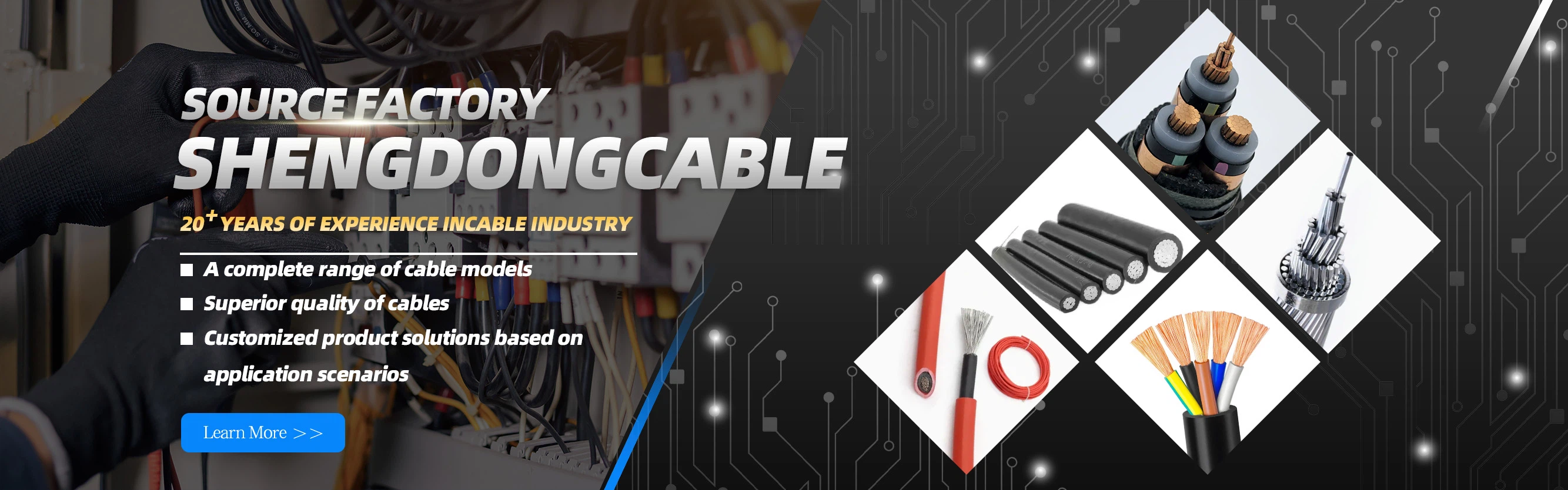
Your Professional Rubber Cable Supplier
Rubber sheathed cable is a flexible and movable cable composed of multiple thin copper wires as conductors, wrapped with rubber insulation layer and sheath, designed for frequent bending, mechanical external forces and complex environments.
Application scenarios:
Industrial equipment, port cranes, mining drilling rigs, automated machinery drag chains
Agricultural and infrastructure hydraulic irrigation stations, temporary power supply for construction sites, lighting systems
Special operation welding machine wiring, submersible motor, power supply for radiation area of nuclear power plant
New energy vehicle charging station cables and robot joint wiring in emerging fields

-
![Rubber Sheathed Flexible Cable]() Rubber Sheathed Flexible CableRubber cable According to the mechanical external force bearing capacity, rubber cables are divided into three categories: light, medium, and heavy.view more
Rubber Sheathed Flexible CableRubber cable According to the mechanical external force bearing capacity, rubber cables are divided into three categories: light, medium, and heavy.view more

Why Choose Us
Guarantee Supply
We have a modern large-scale production base and sufficient production capacity, coupled with a scientific warehousing management system, which can efficiently respond to large-scale and multi specification order demands. Ensure that your engineering project progresses as planned without any worries.
Swift Delivery
Our global logistics network and efficient distribution system are the cornerstone of our commitment to fast delivery. Whether it's a regular order or an urgent need, we can do our best to deliver the high-quality cables you need to the designated location on time.
Complete Range of Cable Categories
Our product line covers a wide range, including power cables (high and low voltage), control cables, wiring, and special cables (such as flame-retardant and fire-resistant, mineral insulated, photovoltaic, wind power, marine, etc.), to meet your diverse and complex project needs and simplify your procurement process.
Ensure Product Quality
Adhere to the concept of "quality is life" and establish a comprehensive quality assurance system (such as ISO 9001). From material quality control at the source to factory inspection of finished products, layer by layer control is implemented to ensure that every roll of cable delivered has stable performance, safety and reliability, and can withstand the test of time and environment.
Advantages of Rubber Cable
Frequent movements.The work needs to move frequently,the sheathing is required to have better wear resistance. Electric drill cable in addition to often moving drill and drag, require a certain tensile force.The excavator cable is continuously rolled up and placed in the unit, and the winding well is dragged on the ground.
Frequently bent. Electric drill cable and extractor cable are the most serious. In particular, the cable is connected to an electric drill or a mining machine and is subjected to bending, torsion, and tension. The cable is required to have good flexibility and resistance to multiple bending and twisting.
Mechanical damage. Cables used in mining areas are easily damaged by fallen ores or rocks, or are overwhelmed by large ore and other equipment (such as mine cars) and materials, and they cause electrical short circuits by flattening cables. In mine cable accidents, the ratio is the highest.
It's not easy to burn. Coal mines and other mines have gas, easy to explosive and flammable. The cable insulation is not easy to ignite after the insulation is damaged; the cable does not secondary burn ignite to avoid expanding the scope of the accident.
Better electrical performance and safety protection system. The mine is extremely humid, with lots of water, and the cables are in direct contact with the workers; therefore, the cables are required to have sufficient electrical strength and good insulation properties. When external mechanical damage occurs and an electrical short-circuit accident occurs, a sensitive and reliable power-off protection system should be used to cut off the power in time; therefore, priority is given to the development of shielded cable types.
The downhole handling condition is poor, the cable is required to be light, small, easy to use and easy to overhaul.
The high-voltage cables used in open-pit mines are required to withstand weather aging.
Product Description
|
Normal area |
Structure |
Insulated |
Overall |
Normal area |
Structure |
Insulated |
Overall(mm²) |
|
2×0.50 |
28/0.15 |
0.50 |
5.20 |
4×1.00 |
32/0.20 |
0.60 |
8.00 |
|
2×0.75 |
24/0.20 |
0.50 |
6.40 |
4×1.50 |
30/0.25 |
0.70 |
9.20 |
|
2×1.00 |
32/0.20 |
0.60 |
6.60 |
4×2.50 |
49/0.25 |
0.80 |
10.90 |
|
2×1.50 |
30/0.25 |
0.70 |
760 |
4×4.00 |
56/0.30 |
0.80 |
12.80 |
|
2×2.50 |
49/0.25 |
0.80 |
9.40 |
4×6.00 |
84/0.30 |
0.80 |
15.40 |
|
3×0.50 |
28/0.15 |
0.50 |
5.50 |
4×10.00 |
126/0.32 |
1.00 |
17.60 |
|
3×0.75 |
24/0.20 |
0.50 |
6.80 |
4×16.00 |
126/0.40 |
1.00 |
21.10 |
|
3×1.00 |
32/0.20 |
0.60 |
7.20 |
5×1.50 |
48/0.20 |
0.70 |
10.70 |
|
3×1.50 |
30/0.25 |
0.70 |
8.50 |
5×2.50 |
49/0.25 |
0.80 |
12.80 |
|
3×2.50 |
49/0.25 |
0.80 |
10.00 |
5×4.00 |
56/0.30 |
0.80 |
14.50 |
|
3×4.00 |
56/0.30 |
0.80 |
11.70 |
5×6.00 |
84/0.30 |
0.80 |
16.40 |
|
3×6.00 |
84/0.30 |
0.80 |
13.00 |
5×10.00 |
126/0.32 |
1.00 |
20.10 |
|
3×10.0 |
126/0.32 |
1.00 |
16.10 |
5×16.00 |
126/0.40 |
1.00 |
24.40 |
|
3x16.0 |
126/0.40 |
1.00 |
19.40 |
|
|
|
|
Types of Rubber Cables
Ethylene Propylene Rubber (EPR) Cables:
EPR rubber cables are prized for their high dielectric strength and thermal resistance.
Butyl Rubber Cables:
Butyl rubber offers exceptional weather and ozone resistance.

Neoprene Cables:
Neoprene rubber cables are known for their excellent resistance to oils, chemicals, and extreme temperatures.
Silicone Rubber Cables:
Known for their wide temperature tolerance and flexibility, silicone rubber cables are popular in both industrial and household applications.
Technical Specifications of Rubber Cable
|
Elastomers |
Continuous Operation (Max Temp.) |
Short Circuit Rating (Max Temp.) |
Minimum Working Temperature |
|
NBR PVC |
90⁰ |
250⁰ |
-30⁰ |
|
CPE |
90⁰ |
250⁰ |
-30⁰ |
|
EPR |
90⁰ |
250⁰ |
-50⁰ |
|
CSP |
90⁰ |
200⁰ |
-35⁰ |
|
Silicone Rubber |
150/180⁰ |
350⁰ |
-55⁰ |
Rubber Cable Construction
|
Conductor |
Annealed tin copper, stranded, flexible |
|
Separator Tape |
Can be applied over the conductor |
|
Sheath |
Heavy-duty and general service sheath |
|
Insulation |
Heat-resistant elastomer, silicone rubber, general service elastomer, etc. |
|
Fillers |
Elastomers, synthetic fibers, natural fibers |
|
Core Identification |
Colored, printing, PE tape, etc. |
Applications of Rubber Cables
Construction and Industrial Sites:
With their longevity and resilience, rubber cables are ideal for power tools, generators, and heavy equipment, making sure secure and efficient electricity transmission.
Marine and Offshore Applications:
Due to their high resistance to moisture, salt, and chemical substances, rubber cables perform properly in marine environments, along with on ships, oil rigs, and ports.
Mining:
In mining operations, rubber cables face up to abrasion, pressure, and publicity to dirt and moisture, making them best for powering drilling equipment.
Portable Equipment:
Rubber cables are frequently found in machinery and portable tools used in locations like factories and workshops where mobility and flexibility are crucial.
FAQ
We're well-known as one of the leading rubber cable suppliers in China. If you're going to wholesale high quality rubber cable, welcome to get pricelist and free sample from our factory. Also, customized service is available.
neoprene cable price, rubber wire covering, h07rn f cable


