

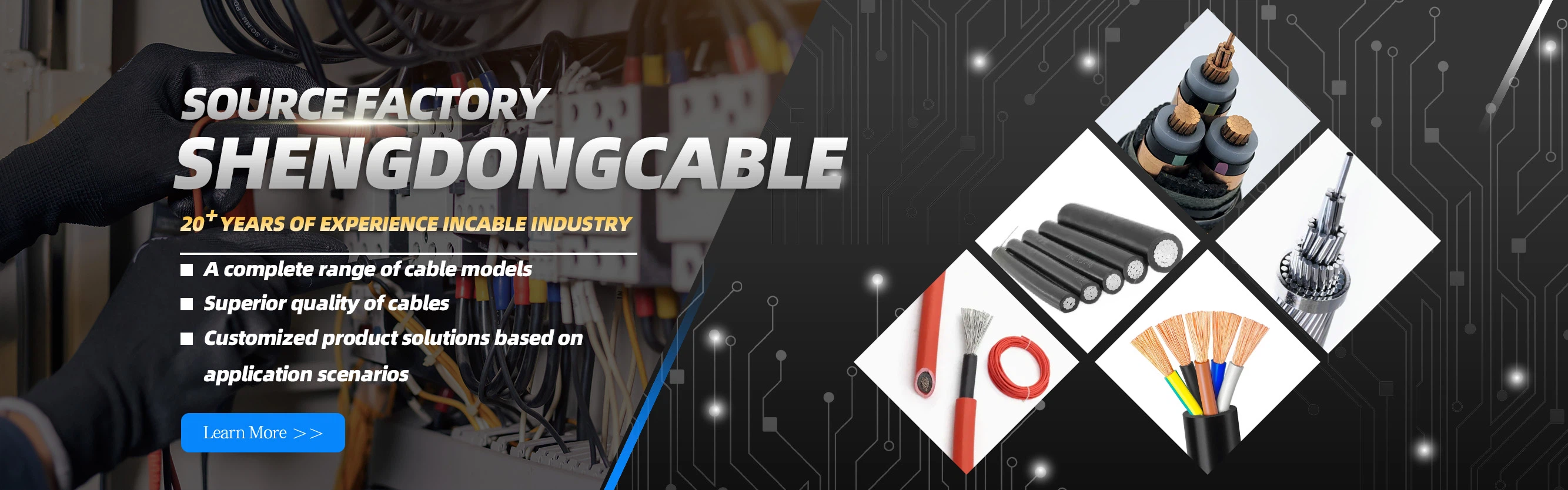
Your Professional Power Cable Supplier
Power cables are insulated wires used for transmitting and distributing electrical energy, typically consisting of one or more conductors (core wires), insulation layers, protective layers, and other components. They are widely used in fixed installation scenarios such as underground, tunnels, trenches, pipelines, indoors, etc., and are an indispensable component of modern power transmission networks (especially urban power grids)
Application scenarios:
The underground distribution network of urban power grid (mainly consisting of medium and low voltage).
Connection lines within power plants and substations.
Internal power supply system of large industrial and mining enterprises.
The incoming lines, main lines, and branch lines of buildings (residential, commercial, industrial).
Underwater power transmission (special underwater cables).
Special locations that require high reliability power supply, such as airports, hospitals, and data centers.
Traction power supply and power lighting system for rail transit (subway, high-speed rail).

-
![PVC Insulated Sheathed Cable]() PVC Insulated Sheathed CableXLPE insulated PVC sheathed power cable is a cross-linked polyethylene insulated polyvinyl chloride sheathed power cable, whose full name is "cross-linked polyethylene insulated polyvinyl chloride sheathed power cable".view more
-
![PVC Insulated PVC Sheathed Flexible Cable]() PVC Insulated PVC Sheathed Flexible CableInsulation material: cross-linked polyethylene (XLPE) is used, which has good electrical properties, heat aging resistance, and mechanical propertiesview more
-
![Xlpe Insulated PVC Sheathed Cable]() Xlpe Insulated PVC Sheathed CableThis product is used in power grids or industrial installations with a rated votage of 35kV orbelow, it has the characteristicsof high working temperature, large current carrying capacity, simple structure, ight weight, unrestricted...view more
-
![PVC Insulated Power Cable]() PVC Insulated Power CableHigh mechanical strength: Equipped with a steel strip armor layer, it enhances the mechanical strength and resistance to external damage of the cable oneview more


Why Choose Us
Guarantee Supply
We have a modern large-scale production base and sufficient production capacity, coupled with a scientific warehousing management system, which can efficiently respond to large-scale and multi specification order demands. Ensure that your engineering project progresses as planned without any worries.
Swift Delivery
Our global logistics network and efficient distribution system are the cornerstone of our commitment to fast delivery. Whether it's a regular order or an urgent need, we can do our best to deliver the high-quality cables you need to the designated location on time.
Complete Range of Cable Categories
Our product line covers a wide range, including power cables (high and low voltage), control cables, wiring, and special cables (such as flame-retardant and fire-resistant, mineral insulated, photovoltaic, wind power, marine, etc.), to meet your diverse and complex project needs and simplify your procurement process.
Ensure Product Quality
Adhere to the concept of "quality is life" and establish a comprehensive quality assurance system (such as ISO 9001). From material quality control at the source to factory inspection of finished products, layer by layer control is implemented to ensure that every roll of cable delivered has stable performance, safety and reliability, and can withstand the test of time and environment.
Advantages of Power Cable
Efficient Electrical Transmission:
Power cables are designed to efficiently transmit electrical energy over long distances. Low electrical resistance reduces energy loss during transmission.
Safety:
Cables provide a safe way to transmit electricity by insulating conductors, preventing electric shock, and minimizing the risk of short circuits and fire.
Concealment:
Underground cables can be buried, allowing for concealed and aesthetically pleasing power distribution. This is especially important in urban areas.
Environmental protection:
Many power cables are equipped with protective layers such as insulation, shielding, and jacketing that protect against moisture, chemicals, UV rays, and physical damage. This increases durability and longevity.
Low Maintenance:
Properly installed power cables typically require less maintenance than overhead power lines, which are exposed to weather and environmental influences.
Reliability:
Underground cables are less susceptible to weather-related disturbances such as wind, ice, and lightning that can affect overhead lines. This increases reliability in certain situations.
Reduced Electromagnetic Interference (EMI):
Shielded power cables minimize electromagnetic interference and are suitable for sensitive applications such as data centers.
Paramenters
|
0.6/1kV 3+1 Core Copper Conductor Steel Wire Armoured Cable Parameter |
||||
|
Nominal cross-sectional area |
Insulation thickness |
Sheath thickness |
Approx.overall |
Approx. weight |
|
Dimaeter of cable |
of cable(kg/km) |
|||
|
mm2 |
mm |
mm |
mm |
|
|
3x2.5+1x1.5 |
0.7 |
1.8 |
16.6 |
472.3 |
|
3x4+1x2.5 |
0.7 |
1.8 |
18.9 |
698.4 |
|
3x6+1x4 |
0.7 |
1.8 |
20.3 |
820.1 |
|
3x10+1x6 |
0.7 |
1.8 |
22.8 |
1047.3 |
|
3x16+1x10 |
0.7 |
1.8 |
26 |
1502.4 |
|
3x25+1x16 |
0.9 |
1.8 |
29 |
1964.7 |
|
3x35+1x16 |
0.9 |
1.9 |
31.1 |
2328.7 |
|
3x50+1x25 |
1 |
2 |
35.3 |
3150 |
|
3x70+1x35 |
1.1 |
2.1 |
39.6 |
4064.9 |
|
3x95+1x50 |
1.1 |
2.3 |
44.1 |
5210.5 |
|
3x120+1x70 |
1.2 |
2.5 |
50 |
6788.2 |
|
3x150+1x70 |
1.4 |
2.6 |
53.7 |
7903.1 |
|
3x185+1x95 |
1.6 |
2.7 |
58.9 |
9578.3 |
|
3x240+1x120 |
1.7 |
2.9 |
65.5 |
11849.5 |
|
3x300+1x150 |
1.8 |
3.1 |
71.2 |
14266 |
|
3x400+1x185 |
2 |
3.4 |
80.6 |
18912.6 |
Types of Power Cable
Low Voltage Power Cables
Low voltage power cables are designed for systems with voltages up to 1,000 volts. These cables are commonly used in residential and commercial settings for applications such as wiring homes, offices, and small businesses.
Medium Voltage Power Cables
Medium voltage power cables are used for systems with voltages ranging from 1,000 volts to 35,000 volts. These cables are typically found in industrial and urban infrastructure applications, such as powering factories, industrial plants, and public utilities.
High Voltage Power Cables
High voltage power cables are designed for transmitting electrical power at voltages above 35,000 volts. These cables are crucial for power transmission and distribution networks, connecting power plants to substations and distributing electricity across vast distances.

Conductors
Conductors are at the core of all cables. These components come in a variety of materials and configurations to suit different applications. For example, they can be made from bare copper, tinned copper, or silver-plated copper wire in gauges ranging from 28 to 4 AWG and configured in one to 60 pairs.
Insulation
Insulation prevents conductors from coming into contact with each other and the external environment. Some of the most commonly employed insulating materials are polyvinyl chloride (PVC), polyethylene (PE), Teflon (PTFE, etc.), and polypropylene (PP).
Shielding
Shielding protects cables against receiving and emitting electrical interference, which can affect the purity and consistency of signal transmission. The type of interference you need protection against determines which shielding material is needed.
Jacketing
The jacket of a cable is its outermost layer of insulation. It provides protection against environmental conditions such as heat, moisture, and abrasion and plays a large role in determining the flexibility of the cable as a whole. Many of the materials used for insulation are also used for jackets, including inexpensive PVC, and weather-resistant polyethylene (PE).
Filler
Fillers are generally added to cables to achieve a rounder shape. Similar to the materials from other cable components, the materials for fillers must accommodate the electrical and environmental requirements of the application.
FAQ
We're well-known as one of the leading power cable suppliers in China. If you're going to wholesale high quality power cable, welcome to get pricelist and free sample from our factory. Also, customized service is available.
dc 9v power cord, micro usb 2a, sjo cord


