

Hey there! I'm an overhead cable type supplier, and I often get asked this question: Can overhead cable types be recycled? Today, I'm gonna dive deep into this topic and share some insights with you.
First off, let's talk about why recycling overhead cables is important. As we all know, the demand for electricity is constantly growing, and so is the need for overhead cables. These cables are used to transmit and distribute power across long distances, and they play a crucial role in our modern society. However, like any other product, overhead cables have a limited lifespan. Over time, they can become damaged, worn out, or obsolete, and they need to be replaced.
When overhead cables reach the end of their useful life, what happens to them? Well, traditionally, a lot of these cables have ended up in landfills. But this is not a sustainable solution. Overhead cables are made up of various materials, including metals like aluminum and copper, as well as insulation materials. These materials have value, and they can be reused or recycled to make new products. By recycling overhead cables, we can reduce the need for virgin materials, conserve natural resources, and minimize the environmental impact of cable production.
Now, let's take a look at some of the common types of overhead cables and whether they can be recycled.
Aluminum Conductor Steel Reinforced (ACSR)
One of the most widely used types of overhead cables is the Aluminum Conductor Steel Reinforced. As the name suggests, this cable consists of an aluminum conductor surrounded by a steel core. The aluminum provides good electrical conductivity, while the steel core adds strength and durability.
The good news is that both the aluminum and the steel in ACSR cables can be recycled. Aluminum is one of the most recyclable materials on the planet. Recycling aluminum requires only about 5% of the energy needed to produce new aluminum from bauxite ore. This means that recycling aluminum can save a significant amount of energy and reduce greenhouse gas emissions.
The steel core in ACSR cables can also be recycled. Steel is a highly recyclable material, and it can be melted down and reused to make new steel products. By recycling the steel core, we can reduce the demand for new steel production and conserve natural resources.
Aluminum Aerial Bundled Cable Cable 4 Phase Core
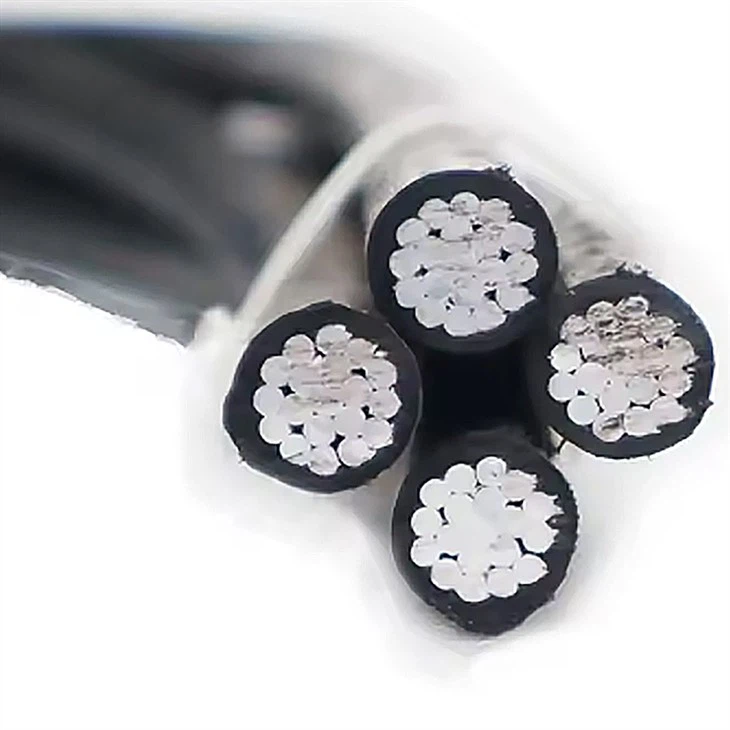
Another type of overhead cable is the Aluminum Aerial Bundled Cable Cable 4 Phase Core. This cable consists of multiple aluminum conductors bundled together and surrounded by an insulation material.
Similar to ACSR cables, the aluminum conductors in aluminum aerial bundled cables can be recycled. Aluminum recycling is a well-established industry, and there are many recycling facilities around the world that can process aluminum cables. The insulation material, on the other hand, may require more specialized recycling processes. Some insulation materials can be recycled, while others may need to be disposed of properly to minimize environmental impact.
Aerial Bundled Cable NO Steel Core
The Aerial Bundled Cable NO Steel Core is another option for overhead power distribution. This cable is made up of multiple aluminum conductors bundled together without a steel core.
Just like the other types of cables we've discussed, the aluminum conductors in aerial bundled cables without a steel core can be recycled. Recycling these cables can help to recover valuable aluminum and reduce the environmental impact of cable production.
So, as you can see, many types of overhead cables can be recycled. But how does the recycling process work?
The first step in recycling overhead cables is to collect and transport them to a recycling facility. This can be done by cable installers, maintenance crews, or waste management companies. Once the cables arrive at the recycling facility, they are sorted and processed to separate the different materials.
The next step is to remove the insulation material from the conductors. This can be done using mechanical or chemical methods. Once the insulation is removed, the conductors are melted down and refined to remove any impurities. The refined metal can then be used to make new cables or other metal products.
It's important to note that the recycling process may vary depending on the type of cable and the recycling facility. Some facilities may have more advanced equipment and processes, which can result in higher-quality recycled materials.
As an overhead cable type supplier, I'm committed to promoting sustainable practices in the industry. That's why I work with recycling partners to ensure that our end-of-life cables are recycled properly. By doing so, we can not only reduce our environmental impact but also contribute to a more circular economy.

If you're in the market for overhead cables, I encourage you to consider the environmental impact of your choices. By choosing cables that are made from recycled materials or can be easily recycled at the end of their life, you can make a positive difference.
Whether you're a utility company, an electrical contractor, or a developer, I'd love to talk to you about your overhead cable needs. We offer a wide range of high-quality overhead cables that are designed to meet your specific requirements. And if you have any questions about cable recycling or our products, don't hesitate to reach out. Let's work together to build a more sustainable future!
References
- Aluminum Association. (n.d.). The Recycling of Aluminum. Retrieved from [Website of Aluminum Association]
- Steel Recycling Institute. (n.d.). Steel Recycling Facts. Retrieved from [Website of Steel Recycling Institute]


