Hey there! As an overhead cable supplier, I often get asked about how we measure the electromagnetic fields (EMFs) of overhead cables. It's a topic that's not only important for us in the industry but also for the general public who might be concerned about the potential health and environmental impacts of these fields. So, let's dive right in and explore this fascinating subject.
First off, why do we even need to measure the EMFs of overhead cables? Well, overhead cables carry electrical currents, and whenever there's an electric current flowing, it generates both electric and magnetic fields. These fields can interact with the environment and living organisms, and in some cases, there might be concerns about their long - term effects. By measuring these fields, we can ensure that the levels are within the safety limits set by international standards and regulations.
Now, let's talk about the tools we use to measure these fields. One of the most common devices is an EMF meter. These meters come in different types, but they all work on the principle of detecting the electric and magnetic components of the field. There are handheld meters that are easy to use and can give you a quick reading of the field strength at a particular location. For more accurate and detailed measurements, we might use stationary meters that can be set up at multiple points around the overhead cables to monitor the fields over a period of time.
When it comes to measuring the electric field, the meter essentially measures the force exerted on a small test charge placed in the field. The unit of measurement for the electric field is volts per meter (V/m). To get an accurate reading, we need to make sure that the meter is properly calibrated and that it's placed at the right distance from the cable. The electric field strength decreases with distance from the cable, so we usually take measurements at different distances to get a better understanding of how the field varies.
Measuring the magnetic field is a bit different. Magnetic fields are measured in units called teslas (T), although for the relatively weak fields around overhead cables, we often use the smaller unit of microteslas (μT). The meter detects the magnetic force on a small magnetic sensor inside it. Just like with the electric field, the magnetic field strength also decreases as you move further away from the cable. However, the shape and distribution of the magnetic field can be more complex, especially if there are multiple cables running parallel to each other.
Another important factor to consider when measuring EMFs is the frequency of the electrical current in the overhead cables. In most power systems, the current has a frequency of 50 or 60 hertz (Hz). The frequency affects how the fields interact with the environment and living organisms. For example, different frequencies can cause different types of biological responses in humans and animals. So, our meters are designed to be able to measure the fields at these specific frequencies accurately.
Now, let's take a look at some of the different types of overhead cables we supply and how their EMF characteristics might vary. We offer a variety of cables, such as the Aluminum Conductor Steel Reinforced. This type of cable is widely used because of its high strength and good conductivity. The steel core provides the necessary mechanical strength, while the aluminum conductor carries the electrical current. The EMF characteristics of this cable depend on factors like the current flowing through it, the number of conductors, and the distance between the cables.
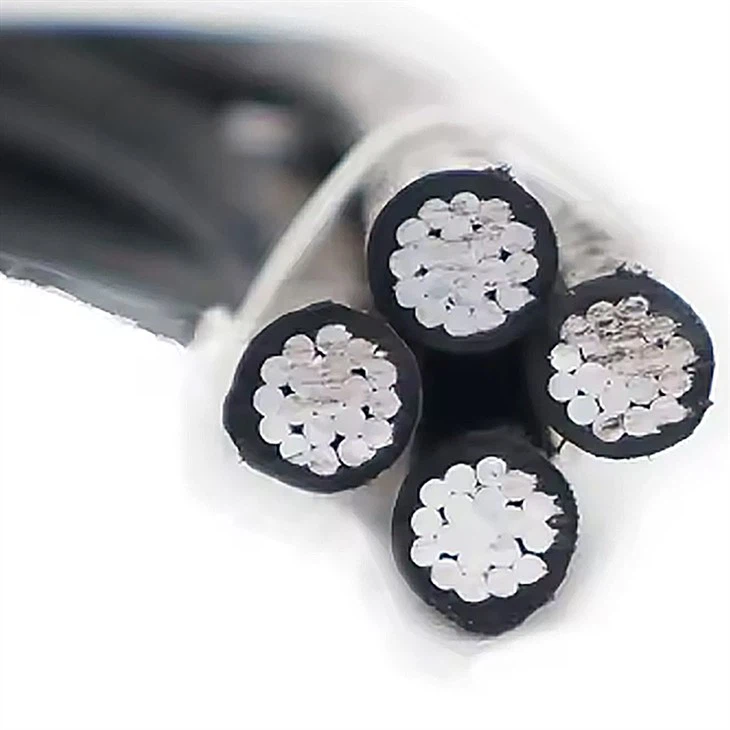
We also have the Aluminum Aerial Bundled Cable Cable 4 Phase Core. This cable is designed to be more compact and efficient, with four phase cores bundled together. The bundling of the cables can affect the way the EMFs are distributed. Since the cables are closer together, the magnetic fields from each cable can interact with each other, which might change the overall field strength and distribution in the surrounding area.
And then there's the Aerial Bundled Cable NO Steel Core. Without the steel core, this cable is lighter and more flexible. However, the lack of the steel core can also have an impact on the EMF characteristics. The steel core in some cables can act as a magnetic shield to some extent, so without it, the magnetic field around the cable might be slightly different.
When we're measuring the EMFs around our overhead cables, we follow strict protocols to ensure the accuracy and reliability of the measurements. We take multiple readings at different times of the day and under different weather conditions. This is because factors like temperature, humidity, and even the load on the cables can affect the field strength. For example, if the cables are carrying a higher current due to increased demand, the field strength will be higher.
Once we have all the measurement data, we analyze it to see if the field strengths are within the safety limits. These limits are set by organizations like the International Commission on Non - Ionizing Radiation Protection (ICNIRP). If the measurements show that the field strengths are higher than the limits, we need to take steps to reduce the fields. This could involve changing the configuration of the cables, such as increasing the distance between them or using shielding materials.
As an overhead cable supplier, we take the issue of EMF measurement very seriously. We want to make sure that our products are not only reliable and efficient but also safe for the environment and the people living and working around them. That's why we invest in the latest measurement technology and follow the best practices in the industry.
If you're in the market for overhead cables and you're concerned about the EMF levels, we're here to help. We can provide you with detailed information about the EMF characteristics of our cables and even help you with the measurement process if needed. Whether you're a utility company looking to upgrade your power lines or a developer building a new infrastructure, we have the right cables for you.

So, if you're interested in learning more or want to start a conversation about purchasing our overhead cables, don't hesitate to reach out. We're always happy to discuss your specific requirements and find the best solutions for you.
References
- International Commission on Non - Ionizing Radiation Protection (ICNIRP). Guidelines for limiting exposure to time - varying electric, magnetic, and electromagnetic fields (up to 300 GHz). Health Physics, 2010.
- National Institute of Environmental Health Sciences. Electromagnetic Fields and Your Health. 2023.