

Hey there! As an overhead line cable supplier, I've seen firsthand how crucial it is to pick the right cable for your overhead line projects. It's not just about getting the job done; it's about ensuring safety, efficiency, and long - term performance. So, let's dive into how you can choose the right overhead line cable.

Understanding Your Needs
First things first, you gotta figure out what you actually need. What's the purpose of your overhead line? Is it for residential areas, commercial zones, or industrial sites? Different applications have different requirements.
For residential areas, you usually need cables that are reliable and can handle the relatively lower power demands. You might also want cables that are less obtrusive, as aesthetics can be a concern in neighborhoods. On the other hand, commercial and industrial sites often require cables that can carry higher loads. They need to be able to handle the large amounts of electricity used by businesses and factories.
Think about the distance the cable needs to cover too. Longer distances can mean more power loss, so you'll need cables with lower resistance. High - voltage cables are often a good choice for long - distance transmission because they can reduce power loss.
Cable Types
There are several types of overhead line cables out there, and each has its own pros and cons.
Aerial Bundled Cables (ABC)
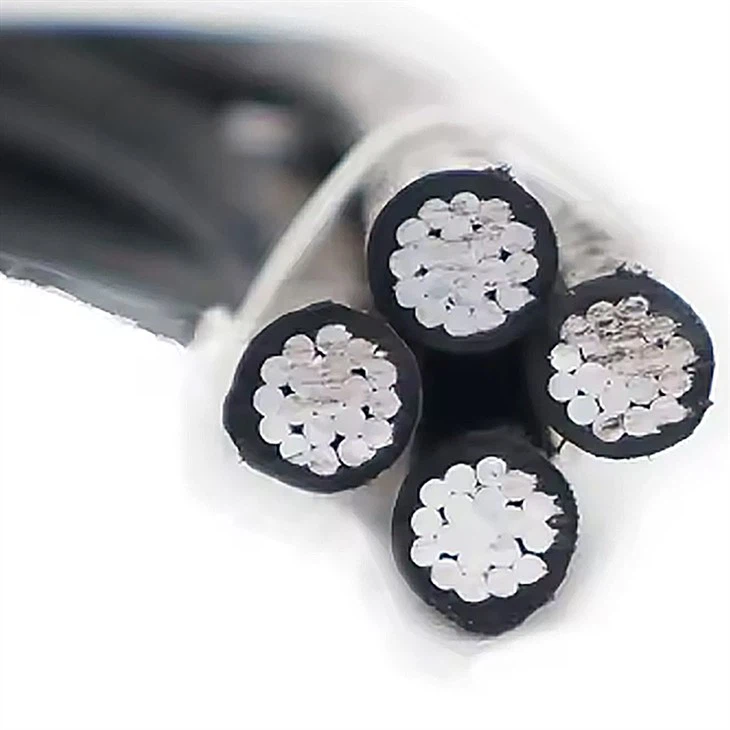
ABCs are becoming increasingly popular. They consist of multiple insulated conductors that are bundled together. One of the big advantages of ABCs is their safety. The insulation reduces the risk of short - circuits and electrocution. They're also more resistant to environmental factors like wind, rain, and lightning.
There are different variations of ABCs. For example, the Aerial Bundled Cable Strip Steel Core has a steel core, which provides extra strength. This makes it suitable for areas with high mechanical stress, like areas with strong winds or where the cable needs to span long distances.
The Aluminum Aerial Bundled Cable Cable 4 Phase Core is made of aluminum. Aluminum is lightweight and has good conductivity, which makes it a cost - effective option for many applications. It's often used in areas where weight is a concern, like on poles that can't support heavy loads.
The Aerial Bundled Cable NO Steel Core is a lighter option. It's suitable for areas where the mechanical stress is relatively low, and you don't need the extra strength provided by a steel core.
Bare Conductors
Bare conductors are the traditional choice for overhead lines. They're made of materials like aluminum or copper. Aluminum bare conductors are popular because they're lightweight and relatively inexpensive. Copper bare conductors, on the other hand, have better conductivity but are more expensive.
Bare conductors are simple and easy to install. However, they're more exposed to the environment, which means they're more prone to corrosion and damage from things like birds and tree branches.
Environmental Considerations
The environment where the cable will be installed plays a huge role in the cable selection.
If you're in an area with a lot of moisture, like a coastal region, you'll need cables that are resistant to corrosion. Some cables come with special coatings or materials that can protect them from the effects of saltwater and humidity.
Areas with extreme temperatures also need special consideration. In very cold climates, cables need to be able to withstand freezing temperatures without becoming brittle. In hot climates, they need to be able to handle high temperatures without losing their conductivity.
If there are a lot of trees or vegetation in the area, you might want to choose cables that are less likely to be damaged by falling branches. Aerial bundled cables are a good option in these situations because their insulation provides an extra layer of protection.
Voltage Requirements
The voltage of your overhead line is another important factor. You need to make sure the cable you choose can handle the voltage.
Low - voltage cables are typically used for residential and small - scale commercial applications. They're designed to carry lower amounts of electricity safely.
High - voltage cables, on the other hand, are used for long - distance transmission and large - scale industrial applications. They need to be able to handle the high electrical stress without breaking down.
Cost and Budget
Let's face it, cost is always a consideration. You need to find a cable that fits your budget without sacrificing quality.
When comparing costs, don't just look at the initial purchase price. Consider the long - term costs too. Some cables might be more expensive upfront but have a longer lifespan and lower maintenance costs. For example, a high - quality aerial bundled cable might cost more than a bare conductor, but it could save you money in the long run because it's less likely to need repairs or replacements.
Installation and Maintenance
Think about how easy the cable is to install. Some cables are more complex to install than others, which can add to the overall cost of your project.
Maintenance is also important. Some cables require more frequent inspections and maintenance than others. For example, bare conductors might need to be inspected regularly for signs of corrosion and damage, while aerial bundled cables are generally more low - maintenance.
Supplier Reputation
As an overhead line cable supplier, I know how important it is to choose a reliable supplier. Look for a supplier with a good reputation in the industry. Check customer reviews and testimonials to see what other people have to say about their products and services.
A good supplier should be able to provide you with technical support and advice. They should also be able to offer a warranty on their products.
Conclusion
Choosing the right overhead line cable is a big decision. It involves considering your needs, the type of cable, the environment, voltage requirements, cost, installation, maintenance, and the supplier. By taking the time to do your research and make an informed decision, you can ensure that your overhead line project is a success.
If you're in the market for overhead line cables, I'd love to help. Whether you have questions about the different types of cables or need advice on which one is right for your project, feel free to reach out. Let's have a chat and see how we can work together to meet your overhead line cable needs.
References
- Electrical Power Systems: Design and Analysis by Turan Gonen
- Overhead Transmission Line Engineering by J. Lewis Blackburn


