

Hey there! As an overhead cable type supplier, I often get asked about the mechanical strength requirements for different types of overhead cables. It's a crucial topic, especially when you're looking to ensure the reliability and safety of your power transmission or distribution systems. So, let's dive right in and explore the mechanical strength needs of various overhead cables.
First off, let's talk about Aluminum Conductor Steel Reinforced (ACSR) cables. These cables are widely used in high-voltage transmission lines. The reason? Their excellent combination of high electrical conductivity and mechanical strength. The steel core in ACSR cables provides the necessary tensile strength to withstand the forces exerted by the cable's own weight, wind, ice, and even seismic activity.
The mechanical strength requirements for ACSR cables are determined by several factors. One of the key factors is the span length between the transmission towers. Longer spans require cables with higher tensile strength to prevent sagging and ensure proper clearance from the ground and other objects. For instance, in mountainous regions where the terrain is uneven and the span lengths can be quite long, ACSR cables with a higher steel content are often preferred.
Another factor is the environmental conditions. In areas prone to heavy ice and snow, the cables need to be able to support the additional weight without breaking. The ice loading capacity of ACSR cables is typically specified in terms of the thickness of the ice layer that the cable can withstand. This is usually measured in millimeters or inches. For example, a cable rated for a 25-mm ice load can safely operate even when a 25-mm thick layer of ice accumulates on it.
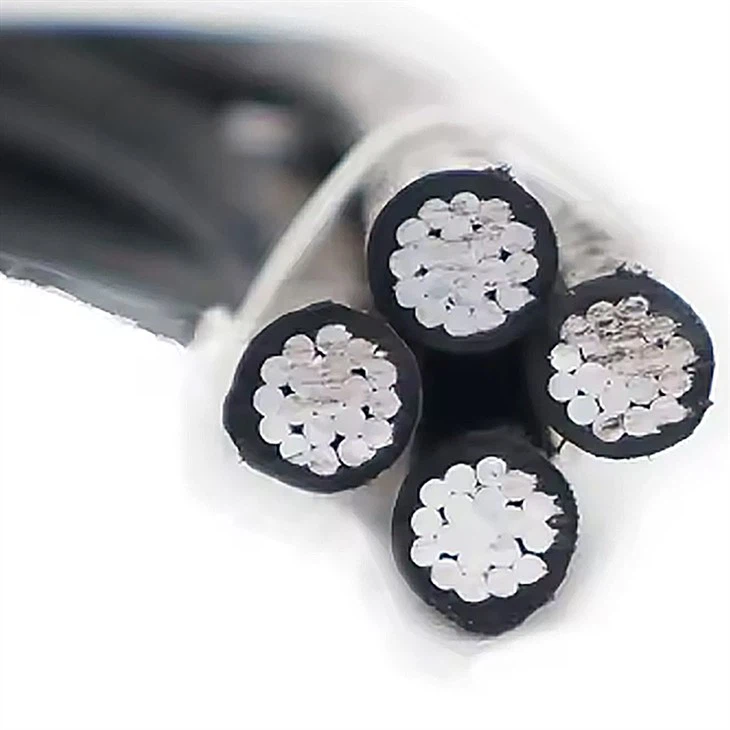
Now, let's move on to Aluminum Aerial Bundled Cable Cable 4 Phase Core (AAC 4-phase). These cables are commonly used in distribution networks, especially in urban and suburban areas. Unlike ACSR cables, AAC 4-phase cables do not have a steel core. Instead, they rely on the aluminum conductors themselves for mechanical strength.
The mechanical strength requirements for AAC 4-phase cables are generally lower than those for ACSR cables. This is because they are used in shorter spans and are less likely to be exposed to extreme environmental conditions. However, they still need to be able to withstand the normal stresses associated with installation and operation. For example, they need to be able to resist bending and twisting during installation without suffering any damage.
One of the advantages of AAC 4-phase cables is their flexibility. This makes them easier to handle and install, especially in areas with limited space. However, this flexibility also means that they may be more prone to damage if not installed correctly. Therefore, it's important to follow the manufacturer's installation guidelines to ensure that the cables are properly supported and secured.
Next up, we have Aerial Bundled Cable NO Steel Core (ABC no steel core). These cables are similar to AAC 4-phase cables in that they do not have a steel core. They are often used in low-voltage distribution networks, such as those found in residential areas.
The mechanical strength requirements for ABC no steel core cables are relatively low. They are designed to be lightweight and easy to install, which makes them a popular choice for small-scale distribution projects. However, they still need to be able to withstand the normal forces exerted by the cable's own weight, wind, and occasional vibrations.
In addition to the above factors, the mechanical strength of overhead cables is also affected by the cable's construction and design. For example, the number of strands in the conductor, the diameter of the conductor, and the type of insulation used can all have an impact on the cable's mechanical properties.
When it comes to choosing the right overhead cable for your project, it's important to consider all of these factors. You need to ensure that the cable you select meets the mechanical strength requirements of your specific application. This will help to ensure the long-term reliability and safety of your power transmission or distribution system.
If you're in the market for overhead cables and have questions about the mechanical strength requirements or need help choosing the right cable for your project, don't hesitate to reach out. As an experienced overhead cable type supplier, I'm here to assist you every step of the way. Whether you're working on a large-scale transmission project or a small distribution network, I can provide you with the high-quality cables and expert advice you need.

So, if you're ready to start your project or just want to learn more about our overhead cable products, get in touch with us. Let's have a chat and see how we can work together to meet your needs.
References
- Electrical Power Transmission System Engineering: Analysis and Design by Turan Gonen
- Overhead Transmission Line Engineering by John W. McDonald


