

Hey there! As an overhead cable supplier, I've dealt with tons of questions about overhead cable installation near buildings. It's a topic that's super important for both safety and functionality. So, let's dive into the regulations that you gotta keep in mind when installing overhead cables close to buildings.
Safety First: Clearance Requirements
One of the most crucial aspects of overhead cable installation near buildings is the clearance distance. You can't just slap those cables up there willy - nilly. The clearance is measured from the building to the nearest part of the cable. This distance is set to prevent any accidental contact, which could lead to electrical hazards like shocks or fires.
For low - voltage overhead cables, the minimum horizontal clearance from a building usually ranges from about 1.2 to 1.8 meters. This gives enough space so that if there's any movement of the cable due to wind or other factors, it won't touch the building. High - voltage cables, on the other hand, need a much larger clearance. We're talking around 3 to 4 meters or even more, depending on the voltage level.
Vertical clearance is also a big deal. The cables need to be high enough above the ground and the building to avoid being easily reached. For areas where people or vehicles are likely to pass, the minimum vertical clearance for low - voltage cables is often around 4.5 meters. High - voltage cables require even greater vertical clearance, sometimes up to 7 meters or more.
Structural Considerations
When installing overhead cables near buildings, you have to think about the structure of the building itself. The cables and their supporting structures shouldn't put too much stress on the building. If you're attaching the cables to the building, you need to make sure that the building can handle the additional load.
For example, if you're using a building wall as a support point for a cable, the wall has to be strong enough. You might need to consult a structural engineer to determine if the building can withstand the tension and weight of the cables. Also, the attachment points should be properly designed and installed to prevent any damage to the building over time.
Electrical Isolation
Electrical isolation is another key regulation. The cables need to be properly insulated to prevent any electrical leakage that could affect the building or its occupants. All cables should have a certain level of insulation resistance, and this resistance should be regularly tested.
In addition, there should be proper grounding for the overhead cables. Grounding helps to protect against lightning strikes and electrical faults. The grounding system should be designed to carry the electrical current safely into the ground in case of a problem.
Cable Selection
Choosing the right type of cable is essential for a safe and efficient installation near buildings. We offer a variety of overhead cables, such as Aluminum Conductor Steel Reinforced. This type of cable is great because it combines the conductivity of aluminum with the strength of steel. It can handle high - voltage applications and is suitable for long - distance runs near buildings.
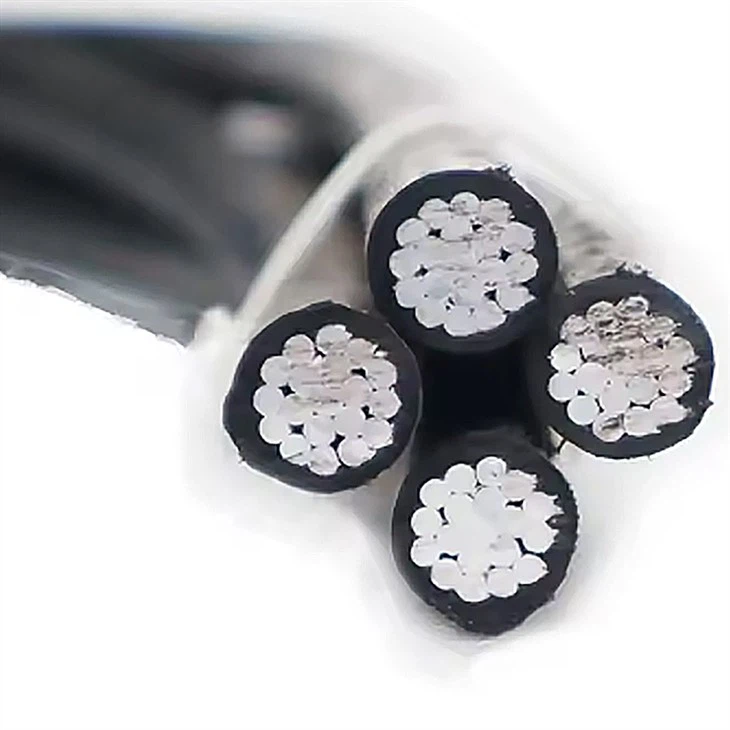
Another option is the Aluminum Aerial Bundled Cable Cable 4 Phase Core. This cable is designed for multi - phase power distribution. It's bundled together, which makes it more compact and easier to install near buildings.
If you're looking for a cable without a steel core, we have the Aerial Bundled Cable NO Steel Core. This cable is lighter and more flexible, which can be an advantage in some installation scenarios near buildings.
Environmental Factors
The environment around the building also plays a role in overhead cable installation regulations. If the area is prone to high winds, the cables need to be installed in a way that can withstand the wind forces. This might involve using stronger support structures or adjusting the tension of the cables.
In areas with a lot of moisture or high humidity, the cables need to have good moisture - resistant properties. Otherwise, the insulation could degrade over time, leading to electrical problems. You might also need to consider the effects of temperature changes. Extreme cold or heat can affect the performance of the cables and their insulation.
Permits and Inspections
Before you start any overhead cable installation near a building, you'll likely need to obtain the necessary permits from the local authorities. These permits ensure that the installation meets all the relevant regulations.

Once the installation is complete, there will usually be an inspection. An inspector will check things like the clearance distances, the insulation, the grounding, and the overall installation quality. If there are any issues, you'll have to fix them before the installation can be approved.
Why Choose Us as Your Overhead Cable Supplier
As an overhead cable supplier, we've got years of experience in the industry. We know all the regulations inside out, and we can help you choose the right cables for your installation near buildings. Our cables are of high quality and are designed to meet all the safety standards.
Whether you're working on a small residential project or a large commercial one, we've got the cables and the expertise to get the job done right. We offer competitive prices and excellent customer service.
If you're in the market for overhead cables for installation near buildings, don't hesitate to reach out. We're here to answer all your questions and help you with your procurement needs. Let's work together to ensure a safe and efficient overhead cable installation.
References
- Electrical Safety Codes and Standards published by the local electrical authority.
- Industry guidelines for overhead cable installation from relevant professional organizations.


