

When it comes to PV1-F solar cables, one of the most fundamental questions that often arises is about the conductor material. As a reputable PV1-F solar cable supplier, I am well - versed in the details of these cables and am excited to share insights about the conductor materials used in PV1 - F solar cables.
The Importance of Conductor Material in PV1 - F Solar Cables
PV1 - F solar cables play a crucial role in photovoltaic systems. They are responsible for transmitting the direct current (DC) generated by solar panels to the inverter, where it is converted into alternating current (AC) for use in homes or businesses. The conductor material is the heart of the cable, as it directly affects the cable's electrical conductivity, durability, and overall performance.
Common Conductor Materials
Copper
Copper is by far the most widely used conductor material in PV1 - F solar cables. There are several reasons for its popularity.
High Electrical Conductivity: Copper has excellent electrical conductivity, which means that it can efficiently carry electrical current with minimal power loss. In a solar power system, where every bit of energy conversion is crucial, this property is highly desirable. A high - conductivity conductor ensures that the maximum amount of electricity generated by the solar panels reaches the inverter, improving the overall efficiency of the system.
Good Thermal Conductivity: Along with electrical conductivity, copper also has good thermal conductivity. This is important because solar cables can heat up during operation due to the flow of current. With good thermal conductivity, copper can dissipate heat effectively, preventing overheating and reducing the risk of cable damage.
Corrosion Resistance: Copper forms a thin oxide layer on its surface when exposed to air, which acts as a protective barrier against further corrosion. This makes copper - based PV1 - F solar cables suitable for outdoor use, where they are exposed to various environmental factors such as moisture, sunlight, and temperature fluctuations.
Mechanical Strength: Copper has sufficient mechanical strength to withstand the stresses and strains during installation and long - term use. It can be easily bent and twisted without breaking, which is an advantage when laying cables in complex solar panel arrays.
Aluminum
Although not as common as copper, aluminum is also used as a conductor material in some PV1 - F solar cables.
Lightweight: One of the main advantages of aluminum is its low density, which makes it much lighter than copper. This can be beneficial in large - scale solar installations, where reducing the weight of the cables can simplify installation and reduce transportation costs.
Cost - Effective: Aluminum is generally less expensive than copper. For budget - conscious solar projects, using aluminum - conductor PV1 - F solar cables can be a cost - effective alternative without sacrificing too much performance.
However, aluminum also has some drawbacks. It has lower electrical conductivity than copper, which means that for the same current - carrying capacity, an aluminum conductor needs to have a larger cross - sectional area. Additionally, aluminum is more prone to oxidation and corrosion, especially in the presence of moisture and certain chemicals. Special connectors and installation techniques are often required to ensure reliable connections and prevent corrosion - related problems.
Impact of Conductor Material on Cable Performance
The choice of conductor material significantly impacts the performance of PV1 - F solar cables.
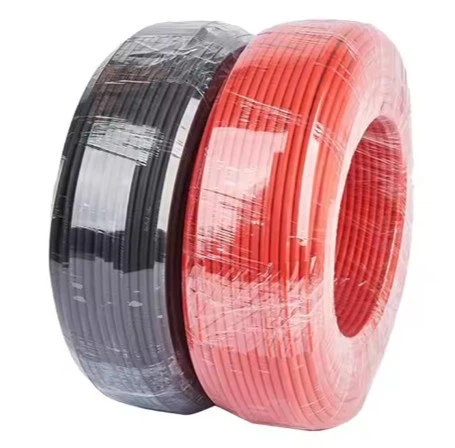

Current - Carrying Capacity: As mentioned earlier, copper has higher electrical conductivity than aluminum. This means that a copper - conductor cable can carry more current for a given cross - sectional area compared to an aluminum - conductor cable. In high - power solar installations, where large amounts of current need to be transmitted, copper cables are often the preferred choice.
Voltage Drop: Voltage drop is an important consideration in solar power systems. A lower - conductivity conductor like aluminum will cause a higher voltage drop over a given length of cable compared to copper. This can result in a decrease in the voltage available at the inverter, reducing the efficiency of the system. To minimize voltage drop, larger - sized aluminum conductors may be required, which can increase the cost and size of the cable.
Long - Term Reliability: The corrosion resistance and mechanical properties of the conductor material affect the long - term reliability of the cable. Copper's superior corrosion resistance and mechanical strength generally make copper - conductor PV1 - F solar cables more reliable over the long term. They are less likely to develop faults due to corrosion or mechanical damage, which can lead to system downtime and costly repairs.
Our PV1 - F Solar Cables
As a PV1 - F solar cable supplier, we offer a range of cables with both copper and aluminum conductors to meet the diverse needs of our customers. Our Single - core Photovoltaic Cable is available in both copper and aluminum variants, providing flexibility in terms of performance and cost.
Our Extension Photovoltaic Dc Cables are designed to extend the reach of the solar power system, and we ensure that the conductor material is carefully selected to maintain optimal performance. Whether you need a high - efficiency copper - conductor cable or a cost - effective aluminum - conductor cable, we have the right solution for you.
Our PV Solar Cable products are manufactured to the highest standards, ensuring excellent electrical and mechanical properties. We conduct rigorous quality control tests to guarantee that our cables can withstand the harsh environmental conditions typically encountered in solar installations.
Why Choose Our PV1 - F Solar Cables
Quality Assurance: We are committed to providing high - quality PV1 - F solar cables. Our cables are manufactured using the best - in - class materials and advanced production techniques. Each cable undergoes strict quality inspections to ensure compliance with international standards.
Technical Support: Our team of experts is available to provide technical support and guidance. Whether you have questions about conductor materials, cable sizing, or installation, we can offer you the information you need to make an informed decision.
Customization: We understand that different solar projects have different requirements. That's why we offer customization options for our PV1 - F solar cables. We can adjust the cable length, conductor size, and insulation properties according to your specific needs.
Contact Us for Procurement
If you are in the market for PV1 - F solar cables, we invite you to contact us for procurement. Our experienced sales team is ready to assist you with product selection, pricing, and order placement. We are dedicated to providing you with the best - quality cables at competitive prices. Whether you are a small - scale solar installer or a large - scale solar project developer, we have the products and services to meet your needs.
References
- "Handbook of Electrical and Electronic Insulating Materials"
- "Solar Power Systems: Design, Installation, and Maintenance"
- Industry standards and specifications for PV1 - F solar cables


