
Insulators play a crucial and multi - faceted role in overhead line cables. As an overhead line cable supplier, I have witnessed firsthand the significance of insulators in ensuring the safe and efficient operation of these power transmission systems.
Electrical Isolation
The primary function of insulators in overhead line cables is to provide electrical isolation. Overhead power lines carry high - voltage electricity, and it is essential to prevent this electricity from flowing into the supporting structures such as poles or towers. Insulators are made of materials with high electrical resistance, such as porcelain, glass, or composite polymers. These materials effectively block the flow of electric current between the energized conductors and the grounded structures.
For example, in a typical distribution network, where the voltage can range from a few kilovolts to tens of kilovolts, insulators are installed at regular intervals along the overhead lines. They are designed to withstand the electrical stress caused by the voltage and prevent flashovers. A flashover occurs when the electrical field strength across the insulator exceeds its dielectric strength, resulting in a sudden discharge of electricity through the air. This can cause power outages, damage to equipment, and even pose a safety hazard to people and property.
Mechanical Support
In addition to electrical isolation, insulators also provide mechanical support for the overhead line cables. The conductors in overhead lines are heavy, especially when considering the long spans between poles or towers. Insulators are designed to bear the weight of the conductors, as well as the forces exerted by wind, ice, and other environmental factors.
Porcelain insulators, for instance, are known for their high mechanical strength. They can withstand significant tensile and compressive forces without breaking. Composite insulators, on the other hand, are lighter and more flexible, making them suitable for applications where weight and ease of installation are important considerations. These insulators are often used in areas with high wind speeds or where seismic activity is a concern.
Protection Against Environmental Factors
Overhead line cables are exposed to a variety of environmental factors, such as moisture, pollution, and UV radiation. Insulators are designed to protect the conductors from these elements and ensure their long - term reliability.
Moisture can reduce the electrical resistance of insulators, increasing the risk of flashovers. To combat this, insulators are often coated with hydrophobic materials that repel water. Pollution, such as dust, salt, and industrial contaminants, can also accumulate on the surface of insulators, forming a conductive layer that can lead to electrical breakdown. Regular cleaning and maintenance of insulators are essential to prevent this from happening.
UV radiation can cause degradation of the materials used in insulators over time. Composite insulators, which are made of polymers, are particularly susceptible to UV damage. To address this issue, manufacturers often add UV stabilizers to the polymer materials to improve their resistance to radiation.
Types of Insulators and Their Applications
There are several types of insulators used in overhead line cables, each with its own unique characteristics and applications.

Pin Insulators: Pin insulators are one of the oldest and most commonly used types of insulators. They are typically made of porcelain and are used for low - to medium - voltage distribution lines. Pin insulators are installed on the cross - arms of poles and provide support for the conductors. They are relatively simple in design and easy to install, but they have limited mechanical strength and are not suitable for high - voltage applications.
Suspension Insulators: Suspension insulators are used for high - voltage transmission lines. They consist of a string of individual insulator units connected together by metal fittings. Suspension insulators can be made of porcelain, glass, or composite materials. They are designed to withstand high mechanical loads and electrical stresses, and they can be easily adjusted to accommodate different line tensions and spans.
Strain Insulators: Strain insulators are used at the end of a line or at points where the direction of the line changes. They are designed to withstand the tensile forces exerted by the conductors and prevent them from pulling the poles or towers out of position. Strain insulators are often used in combination with suspension insulators to provide a complete solution for overhead line support.
Our Product Offerings
As an overhead line cable supplier, we offer a wide range of high - quality insulators and cables to meet the diverse needs of our customers. Our product portfolio includes Aerial Bundled Cable NO Steel Core, which is suitable for low - voltage distribution networks. This cable is lightweight, easy to install, and provides excellent electrical performance.
We also offer Aluminum Conductor Steel Reinforced cables, which are commonly used in high - voltage transmission lines. These cables combine the high conductivity of aluminum with the high strength of steel, making them ideal for long - distance power transmission.
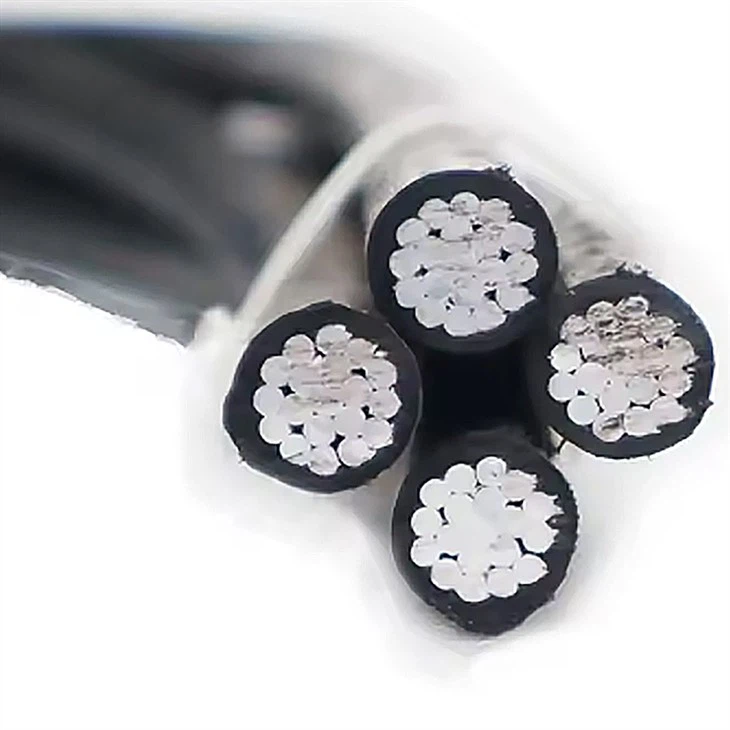
Another product in our range is the Aluminum Aerial Bundled Cable Cable 4 Phase Core. This cable is designed for three - phase distribution systems and provides a cost - effective solution for power delivery in urban and rural areas.
Importance of Choosing the Right Insulators
Choosing the right insulators for overhead line cables is crucial for ensuring the safety, reliability, and efficiency of the power transmission system. The wrong choice of insulators can lead to frequent power outages, increased maintenance costs, and even safety hazards.
When selecting insulators, it is important to consider factors such as the voltage level, environmental conditions, and mechanical requirements of the application. For example, in areas with high pollution levels, composite insulators may be a better choice than porcelain insulators, as they are more resistant to pollution and require less maintenance.
Contact Us for Procurement
If you are in the market for high - quality overhead line cables and insulators, we invite you to contact us for procurement. Our team of experts can help you select the right products for your specific needs and provide you with professional advice on installation and maintenance. We are committed to providing our customers with the best products and services at competitive prices.
References
- Greenwood, A. (1991). Electrical Transients in Power Systems. Wiley - Interscience.
- Grover, F. W. (1973). Inductance Calculations: Working Formulas and Tables. Dover Publications.
- Westinghouse Electric Corporation. (1964). Electrical Transmission and Distribution Reference Book. Westinghouse Electric Corporation.


