


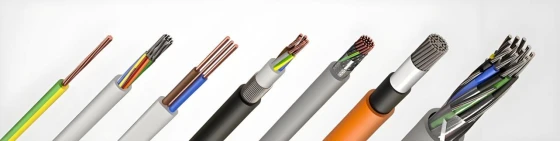
Power cables play a crucial role in our daily lives. They carry power to our homes, schools, and offices. Without these cables, we would not be able to use lights, computers, or get warm water. Power cables ensure that energy is directed to the places that need it the most. It is essential to know the basics of cables and power cables. This helps ensure that power is sent safely and works well for us.
Understanding Power Cables and Their Importance
Power cables are a type of strong and safe cable. The primary function of power cables is to transmit large amounts of power from one location to another, both near and far. These cables move electricity from energy plants to homes, offices, or other buildings where people work. Power cables come in many sizes. There are different types, materials, and uses for these cables to fit many needs.
Power cables help ensure that electricity is safe and works well. Power cables are used in many places. You find them in cities, in big factories, and even under the sea. The cables are what keep the lights on. They help machines and whole buildings work. Without power cables, our lives and cities would be significantly different.

Basic Structure of Power Cables
A power cable has three main parts.
Conductor: The central part of a power cable. It helps carry electricity and lets it move without a problem.
Insulator: The layer that goes around the conductor. This part keeps the electricity inside the cable. It stops any leaking and ensures safety.
Sheath/Jacket: The outermost part of the cable. It keeps the inside parts safe from water, sunlight, heat, and other things that can harm the cable.
There are other layers in cables as well. Cable filling helps keep out water. Bedding keeps the cable's insulated cores safe. Armouring is there to give more strength and stop damage. Each part has its own job, so the cable can work well and be safe.
Major Types of Power Cables
Here are four common ways to group power cables:
1.By Voltage Level
|
Type |
Description |
Typical Application |
|
Low Voltage Power Cable (LV) |
Rated up to 1kV. |
Homes, shops, offices |
|
Medium Voltage Power Cable |
1kV to 35kV. |
City grids, factories, large commercial complexes |
|
High Voltage Power Cable (HV) |
35kV to 220kV. |
Regional power transmission, substations, heavy industry |
|
Extra/Ultra High Voltage Power Cable (EHV/UHV) |
Above 220kV. |
National grids, cross-border transmission |
2.By Conductor Material
|
Type |
Description |
Typical Application |
|
Copper Conductor Cable |
Excellent conductivity and durability. They can bend easily, carry more current, and last longer. Critical installations where high safety and performance are required. |
High-rise buildings, city power supply, factory machines |
|
Aluminum Conductor Cable |
Lighter than copper and cost less. They carry a bit less current but are good for long lines where weight matters. |
Long-span overhead lines, large outdoor installations |
3.By Insulation Material
|
Type |
Description |
Typical Application |
|
PVC Insulated Cable |
Use PVC (polyvinyl chloride) which is tough and resists heat, moisture, and oil. Flexible and cheap, but not best for high heat. |
Home wiring, small buildings, indoor circuits |
|
XLPE Insulated Cable |
XLPE (cross-linked polyethylene) can handle high heat, stress, and chemicals. It lasts longer and stronger than PVC and safer for big loads. |
Underground cables, heavy industries, power plants, substations |
|
Rubber Insulated Cable |
Soft, bend easily, resist water and oil, and are safe to touch. They can move with portable tools. |
Portable devices, outdoor sites, temporary power. |
4.By Installation Type
|
Type |
Description |
Typical Application |
|
Fixed Power Cable |
Put in one place forever. Hidden inside walls, ceilings, or floors, they stay safe from damage. |
Building wiring, hidden conduits, fixed plants |
|
Direct Buried Cable |
This type is laid underground without extra pipes. Need a thick jacket to resist soil, water, and pressure. It hides the cables safely under roads and fields. |
Underground power networks |
|
Aerial/Overhead Cable |
Stretched between poles in the air. They cost less and must stand strong winds, rain, and sun. |
Rural grids, street lighting. |
|
Submarine Cable |
Crossing rivers, lakes, or offshore energy transmission. They must be waterproof, strong, and safe from fish and water pressure. |
Offshore power, islands, cross-sea connections |
Difference Between Power Cords and Power Cables
Power cords and power cables are not the same thing. A power cord is a short, bendable wire. It is used to connect things like your laptop or TV to a plug or an outlet. Power cords are made to be easy to use and to move around. However, they can only handle low to moderate amounts of power.
A power cable is bigger and stronger than a power cord. It is built to move much power across large distances. You often see these cables in factories or on utility lines. The cable is made to handle high voltage, so it works well even when the weather is bad.
Main Applications of Power Cables

Buildings and Homes: Power cables help turn on lights, fans, plugs, heaters, and many other appliances every day.
Industry and Factories: Many factories use strong power cables to run big motors, equipment, and machines.
Transport and Infrastructure: Power cables help keep signals, lights, and other big systems running.
How to Choose the Right Power Cable?
Choosing the right cable for the place is very important. It helps the cable last longer and keeps the place safe. Before you choose one, consider a few key factors.
Your Needs: Think about what you want to power. Check to see the voltage and current it will need. Pick a cable that has the right size and length for this. Make sure the cable's plug or connector fits your machine.
Environment: Consider the location where this cable will be installed. The cable can be used both inside and outside, in wet, hot, or underground environments. You need a cable that can handle the weather, water, fire, or any chemicals it might face.
Quality and Safety: Always go for good cables from brands you can trust. Make sure the wires show a safety mark, have gone through safety tests, and meet local rules.
Power cables help keep electricity moving safely in homes, offices, and other places. Select high-quality cables, use them correctly, and take proper care of them to achieve the best results. For trusted power cable solutions, choose Shengdong Cable today.


